Avicena Raises Over $100 Million to Commercialize microLED AI Interconnects
Avicena’s Series C and leadership change put product readiness in focus as LightBundle moves beyond evaluation milestones.
New funding targets the move into products
Avicena announced on November 24 that it has raised more than $100 million in Series C financing to commercialize its LightBundle microLED optical interconnect platform for AI infrastructure. The company announcement also names Kevin Pope as the successor to chief executive Marco Chisari. Pope says the capital will support recruitment, engineering and development, with a first product targeted for next year. That makes 2027 a management objective, rather than an established volume-shipment date.
Optics.org reported the financing on November 25, while Photonics Spectra also covered the round and leadership change. These are separate publishers reporting the same company announcement, not independent laboratory validation. Their coverage supports the identity of the event; technical performance and commercial readiness still require their own evidence. The new financing is a different development from the connector demonstration that Goilips covered in September.
The immediate significance, in Goilips’ assessment, is the transition being funded. A useful evaluation platform lets a customer investigate an architecture. A supported product needs a repeatable configuration, manufacturing controls, integration documentation and a defined support process. Financing can help a supplier undertake that work, but the amount raised does not establish how quickly each requirement will be met. Buyers should therefore track the next deliverable rather than treat a funding headline as a completed qualification.
An optical architecture closer to compute and memory
Avicena describes LightBundle as a laser-free system that connects microLED arrays to silicon photodetectors through multicore fiber. Instead of concentrating the connection into a small number of very fast optical channels, it distributes traffic over many slower channels. The intended applications include connections within and between packages and links across accelerator systems. Those targets place the platform in the discussion about AI compute and memory connectivity, rather than making it a universal replacement for every network optic.
The company links its commercialization effort to earlier evaluation-kit shipments and a connectorized demonstration. These are useful development milestones, yet they answer different questions. An evaluation kit can expose link behavior to a customer; a detachable connection can make assembly and handling more practical. Neither milestone alone establishes production yield, field reliability or compatibility with every host. The funding announcement does not provide a complete production specification or a named deployment to use as a reference design.
For readers comparing architectures, Goilips suggests starting with the system boundary. A comparison should state which components and operating conditions are included before presenting a result. A transmitter measurement, a complete link measurement and an application benchmark are different observations. Without that boundary, even a carefully measured number can answer a different question from the one a purchasing team actually needs to resolve. This is an editorial comparison method, not a new performance claim about LightBundle.
What customers can ask to evaluate next
The following are Goilips’ proposed evaluation questions. First, define the connection being considered: the endpoints, required payload capacity, mechanical envelope and permitted operating conditions. Ask the supplier which development platform supports that use case and which features remain on its roadmap. A written distinction between available equipment and planned equipment gives both sides a common basis for scheduling work. It also makes later changes easier to assess against the original project assumptions.
Second, request a reproducible acceptance procedure. The useful output is a record of the hardware revision, software settings, test conditions and observed behavior. A customer can then decide whether another trial used a comparable configuration. Where a link has a detachable optical interface, the evaluation plan can include the intended assembly and service workflow. These questions do not imply that Avicena has failed a particular test; they identify information a prospective customer would need before committing to a design.
Third, keep commercial readiness visible alongside engineering results. A supplier discussion can cover sample availability, documentation, manufacturing milestones and the process for reporting a change. Customers can ask what support applies during evaluation and what would change at product release. The aim is to connect a promising technical result with an executable integration plan. A financing announcement is an occasion to revisit those dependencies, rather than evidence that the dependencies have already disappeared.
Evidence that will matter after the round
The next meaningful signals would include a defined product configuration, a documented availability milestone and customer evaluation results with clear conditions. Public information may not cover every commercial detail, so project teams should distinguish what has been disclosed from what they have confirmed directly. Goilips would regard that progression as more informative than simply repeating the funding amount in later coverage. It connects the investment to the practical work required for a usable interconnect.
The sources also require careful reading. Optics.org and Photonics Spectra disagree on the earlier Series B amount, and a channel-rate figure in the optics.org account is inconsistent with the aggregate kit description. This article does not use either disputed detail. The company’s current announcement and release listing identify November 24; an earlier search snapshot showed an inconsistent dateline. The live primary page was checked before publication. None of these discrepancies changes the verified Series C financing and leadership announcement.
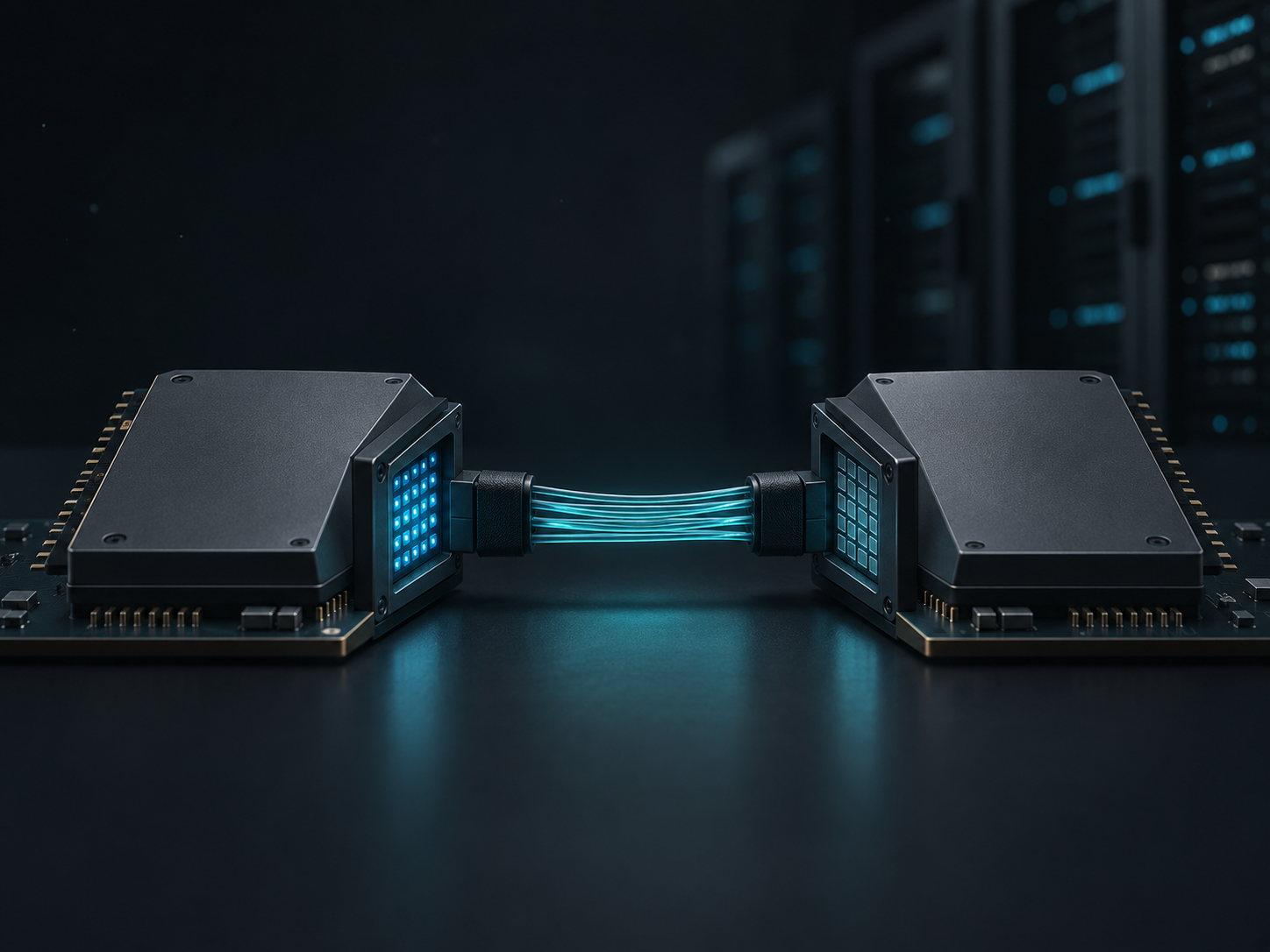
For optical suppliers and system builders, the development is a reason to watch another approach to short-distance AI connectivity. It is not evidence of an industry-wide migration or a purchase commitment by an investor’s parent company. The financing and technology descriptions above are attributed to the listed sources; the evaluation framework is Goilips’ analysis. The generated cover is a conceptual illustration of microLED emitters, detectors and fiber, not a photograph of a commercial Avicena product.