Marvell Agrees to Acquire Lumentum in $115 Billion AI Connectivity Deal
The proposed all-stock combination would unite connectivity silicon, lasers and optical manufacturing; shareholder and regulatory approvals remain outstanding.
An agreement with a long approval path
Marvell Technology and Lumentum announced on November 2 that they had agreed to combine through an all-stock acquisition of Lumentum. The companies put Lumentum’s implied enterprise value at $115 billion when the agreement was announced. For the optical communications industry, the significance extends beyond the transaction’s size: a major supplier of connectivity semiconductors proposes to bring lasers, optical components and specialized manufacturing much closer to its chip development process.
Under the announced terms, each Lumentum common share would receive 4.5 Marvell common shares. Existing Marvell shareholders would hold approximately 67 percent of the combined company and Lumentum shareholders approximately 33 percent on a fully diluted basis. Completion is expected in the first half of 2028, subject to approval by both companies’ shareholders, regulatory clearance and other customary conditions. The agreement therefore establishes a proposed combination, rather than a completed acquisition or an immediate change to product ownership.
The distinction between enterprise value and a cash payment is also important. This is a fixed-share exchange, so the market value of the consideration can change as Marvell’s share price moves. The $115 billion figure describes the announced implied enterprise valuation; it should not be read as a guaranteed cash price. This article uses the announcement terms and does not substitute a later share-price calculation for those terms.
Why silicon and light sources are converging
The proposed portfolio pairs Marvell’s electrical and optical interconnect, network switching and custom silicon capabilities with Lumentum’s lasers, optical transceivers, optical circuit switches and compound semiconductor manufacturing. The companies describe closer coordination across that signal chain as a route to integrated optical solutions. Their investor presentation places silicon photonics, electronic processing, light sources and packaging within a broader connectivity platform, rather than treating an optical module as an isolated component.
In their joint investor call, management argued that connectivity is becoming central to AI infrastructure performance, bandwidth and energy efficiency. They expect optical connections to extend beyond links between data centers and racks toward more tightly coupled accelerator systems. These are the companies’ architectural expectations. They do not establish that every copper connection will be replaced, or that a specific integrated product is already qualified for customers.
From an engineering perspective, bringing the component roadmaps together could make trade-offs easier to resolve. Laser output, optical coupling loss, receiver sensitivity, electrical drive and package temperature influence the same link budget. A change that improves one component can still make the complete assembly harder to cool, test or manufacture. Coordinated design could help align those constraints earlier. Whether ownership provides a measurable advantage over close supplier partnerships will have to be demonstrated through working products and customer qualification.
Manufacturing and customer access will determine the outcome
Lumentum’s indium phosphide manufacturing and laser expertise are a material part of the proposed combination. Lightwave’s reporting highlights the opportunity to connect semiconductor design and advanced packaging with those specialized production capabilities. Optics.org similarly describes the transaction in the context of near-packaged and co-packaged optics. Both approaches place optical functions nearer processing silicon, making the boundaries between component design, assembly and system integration increasingly consequential.
The practical question for module makers is how that integration would affect access to components and roadmaps. Fierce Network’s independently reported analysis identifies the balancing act: Marvell supplies chips to optical module manufacturers, while Lumentum also participates in products those customers sell. Light Reading examines the related tension between a more integrated supplier and buyers seeking open, interoperable alternatives. Those are questions about future commercial behavior, rather than evidence that supply terms have already changed.
Goilips’ assessment is that buyers should evaluate any future integrated offering against a complete operating specification. Useful evidence would include power consumption at the target workload, thermal limits, optical margins, manufacturing yield and test coverage. Serviceability matters as well: replacing a removable transceiver differs from repairing an assembly with optics close to a processor. A more integrated design needs an acceptable maintenance path alongside higher bandwidth. The merger announcement itself supplies none of those product-level acceptance results.
Supply resilience is another consideration. A broader internal portfolio could improve coordination, but customers may still want alternative qualified sources for critical optical functions. Procurement teams will need clarity on component availability, interoperability and support periods before treating integration as a reduction in operational risk. These are evaluation criteria drawn from the proposed architecture, not commitments made by the companies.
What is confirmed, and what remains a forecast
The confirmed development is the announced agreement and its disclosed exchange structure, expected approval path and intended combination of capabilities. The companies also describe a $550 billion addressable market opportunity and more than $1 billion in annual run-rate cost synergies. These figures are management projections. They are not current combined revenue, committed customer spending or savings already achieved. Their investor materials explicitly identify uncertainty around completion, integration and future business performance.
For the optical supply chain, the next useful milestones are shareholder decisions, regulatory progress and concrete product or manufacturing updates. Evidence of faster qualification, dependable production and sustained support for existing customers would give the integration thesis more substance. Until then, the agreement is a significant strategic signal about the value of combining electronics and photonics, while its technical and commercial benefits remain to be proved.
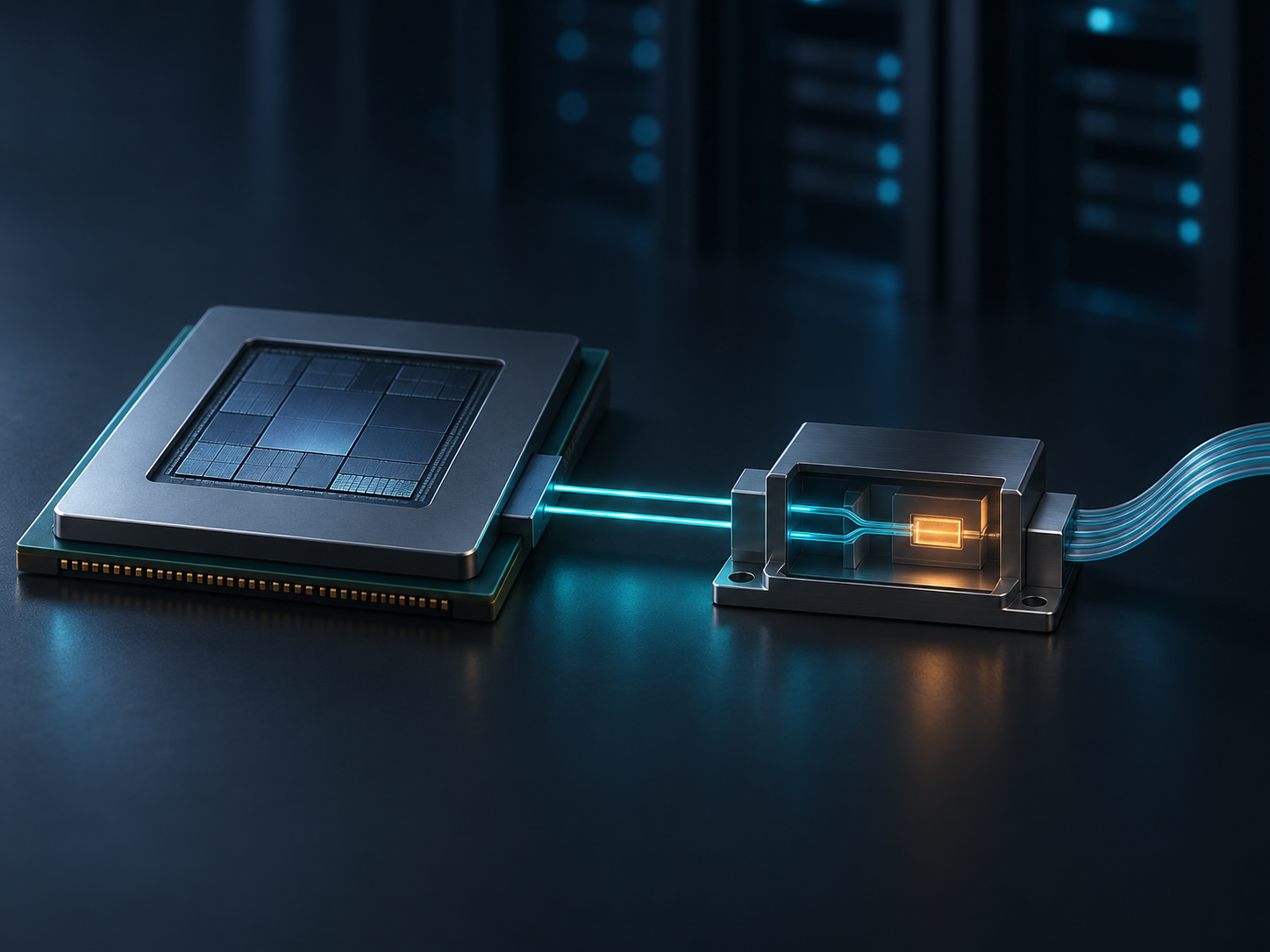
Source basis: the joint announcement, SEC-filed investor call and investor presentation establish the companies’ terms and stated intentions. Independent coverage from Lightwave, optics.org, Fierce Network and Light Reading provides cross-checks and industry context. Engineering and procurement implications above are Goilips’ analysis. The cover is an AI-generated conceptual illustration, rather than a photograph of a commercial product.