USITC Opens Section 337 Investigation into Vertical Power Delivery Systems
The patent investigation reaches across power-semiconductor, module and server suppliers serving high-current AI and high-performance computing platforms.
What the USITC has opened
The U.S. International Trade Commission voted on October 9, 2026 to institute investigation 337-TA-1526 into certain vertical power delivery systems, their components and computing systems containing them. The case is based on a complaint filed by Massachusetts-based Vicor Corporation on September 9 and supplemented the following day. Vicor alleges that imports and U.S. sales of covered products infringe asserted claims of a U.S. patent and asks for a limited exclusion order and cease-and-desist orders. The Commission named entities associated with Delta Electronics, Infineon Technologies, Luxshare Precision, Monolithic Power Systems, Flex, Celestica, Quanta, Foxconn and Ingrasys as respondents. This is a broad list because the disputed technology can appear at several stages of a computing-system supply chain: semiconductor conversion devices, packaged power modules, accelerator boards and completed servers. Institution is a procedural decision to investigate. It is not a finding that any respondent infringed a valid patent, and the respondents will have opportunities to contest infringement, validity, domestic-industry requirements and the requested remedies.
Why vertical power delivery matters to AI systems
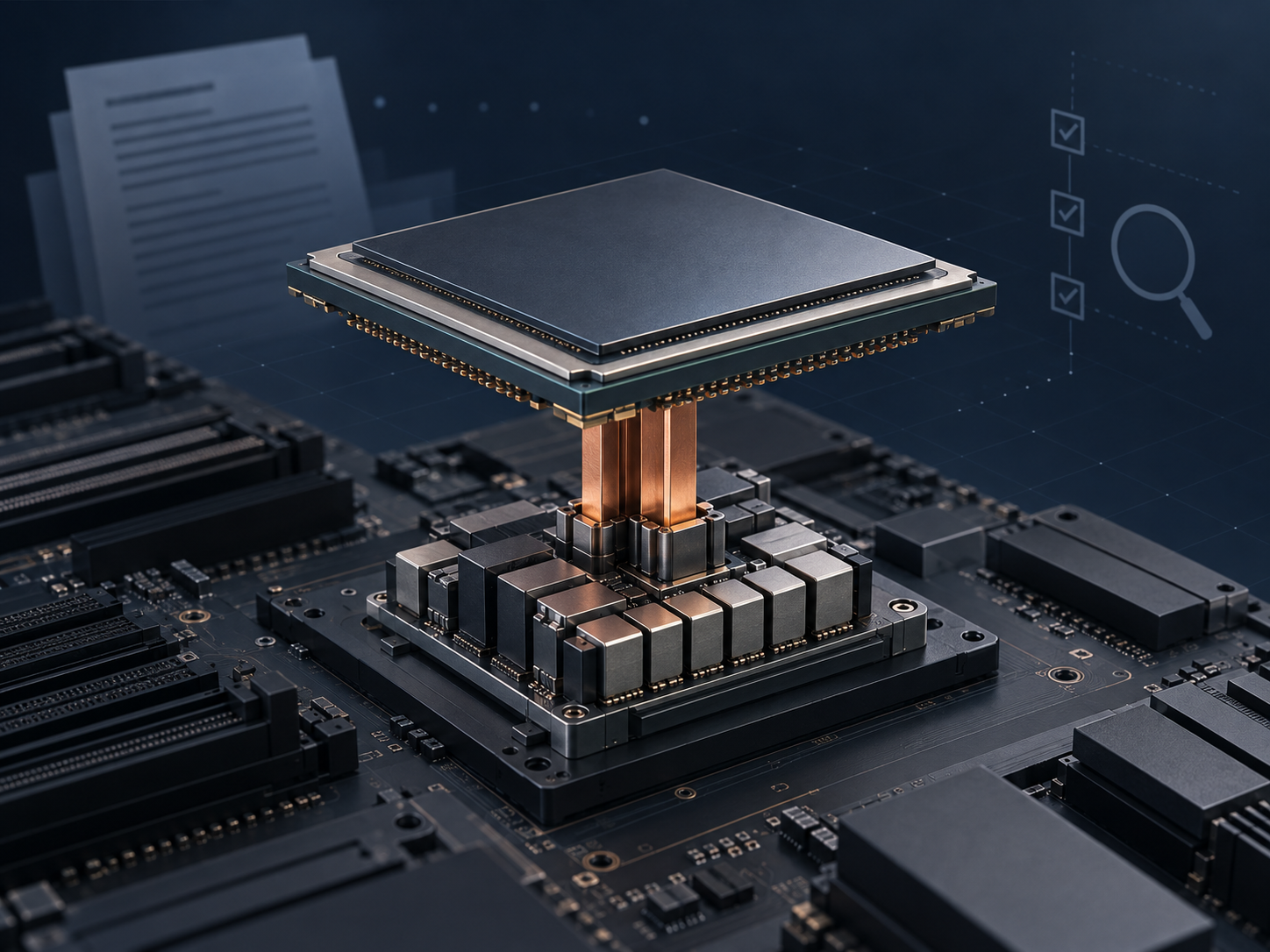
Modern AI accelerators operate at low voltages while drawing extremely high and rapidly changing current. Conventional lateral power delivery places voltage-regulation components beside the processor and carries current across motherboard or package conductors. Resistance and inductance in that final path create loss, heat and transient-response problems as current rises. Vertical power delivery moves conversion or current-multiplication hardware beneath, above or much closer to the processor load, shortening the high-current path and freeing valuable area around the compute package. The architectural goal is higher current density, lower distribution loss and faster response to abrupt workload changes. It is relevant to GPUs, TPUs, CPUs, custom AI ASICs and network processors, but the term does not describe one universal implementation. Designs can differ in bus voltage, conversion stages, magnetic components, packaging, cooling, board construction and the boundary between a power module and the computing system. Vicor identifies its patent position with U.S. Patent No. 10,903,734 in related public reporting. Whether a particular product falls within an asserted claim is a legal and technical question that will be addressed through claim construction, evidence and expert analysis rather than by the general similarity of its layout.
Supply-chain exposure and commercial implications
The respondent list shows why the investigation matters beyond a dispute between two component vendors. AI servers are assembled through globally distributed supply chains in which a power semiconductor may be designed by one company, packaged into a regulator by another, integrated on an accelerator board by an original-design manufacturer and imported inside a completed rack-level system. A limited exclusion order, if ultimately issued, can reach accused imports regardless of where the disputed element sits in that chain, while a cease-and-desist order can restrict certain domestic commercial activity by named parties. No such remedy has been imposed in this investigation at the institution stage. Companies should avoid treating the case as a present import ban. A practical response is to map which designs, suppliers, manufacturing sites and U.S. import entities touch the relevant power-delivery architecture; preserve technical records; and establish change-control procedures for any redesign. Procurement teams may also need to verify who is the importer of record, which bill-of-material revision enters the United States and whether contractual indemnities cover an ITC proceeding. Those details can differ from the commercial brand shown on a finished server. Customers should also distinguish patent licensing from component qualification. A license may address intellectual-property exposure but does not by itself establish electrical performance, thermal reliability, interoperability or production capacity. Conversely, a technically qualified alternate source may still require a separate legal assessment. The case could influence sourcing discussions for AI accelerators and high-performance servers because power density has become a central system constraint alongside networking bandwidth and cooling.
Procedure, sources and what to watch
The USITC will assign the matter to an administrative law judge, who will set an evidentiary schedule and issue an initial determination. The Commission says it will establish a target completion date within 45 days after institution. Any initial determination can be reviewed by the Commission. If a remedial order is eventually issued, it becomes effective when issued and ordinarily becomes final after a 60-day presidential review period unless the U.S. Trade Representative disapproves it for policy reasons. The strongest near-term signals will be the formal notice of investigation, the assigned judge and procedural schedule, claim-construction positions, respondent answers, public-interest submissions and any motions concerning termination, settlement or consent orders. Later milestones may clarify which products remain in scope and whether redesigns or licenses change the commercial risk. Goilips reviewed the USITC release, the earlier Federal Register notice and China’s trade-remedy information summary. The article is an independent synthesis for industry readers and not legal advice. Source: USITC news release; Federal Register notice; China Trade Remedy Information.