Luna Brings Faster OFDR Measurement to AI Optical Production
New Lightwave Analyzer configurations cover O band and C/L band testing as dense optical devices move from development into production.
What happened and why it matters
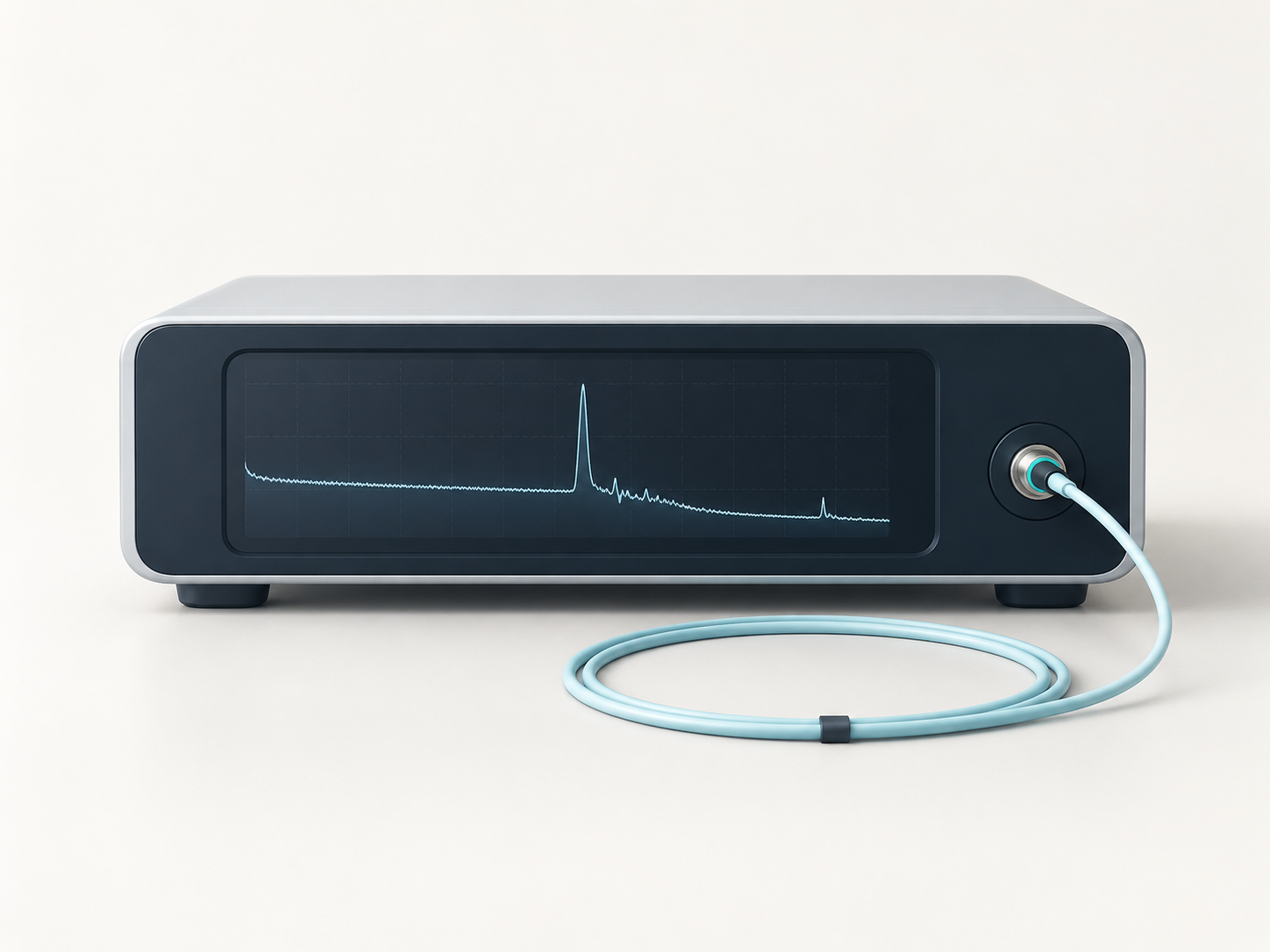
Luna Innovations used ECOC 2026 to present faster LWA Lightwave Analyzer models for O-band and C/L-band measurements. The OFDR platform is designed to locate distributed reflections and loss in fiber-to-chip assemblies, connectors, switches and other dense photonic devices, with the company citing feature resolution down to 16 micrometers. As CPO, optical switches and multi-port modules become denser, pass-or-fail testing is not enough. Fast spatial diagnostics can shorten root-cause analysis and support production yield, but throughput, fixture repeatability and correlation with field failures remain key purchasing criteria. New Lightwave Analyzer configurations cover O band and C/L band testing as dense optical devices move from development into production.
Engineering, qualification and system boundaries
The announcement should be evaluated as part of a complete optical system rather than as an isolated peak specification. A production link includes host SerDes, electrical channels, photonic devices, lasers, connectors, fiber, receivers, forward-error correction, management software and cooling. Improvements in one block can be lost through insertion loss, retiming power, poor fiber handling or limited thermal margin elsewhere. Engineering teams should document intended reach, lane count, modulation, fiber type, environmental limits and service model before comparing alternatives. They should also separate an event demonstration, an engineering sample, a qualified component and a volume product, because each represents a different level of technical and supply-chain risk. Qualification should cover optical and electrical performance, stressed inputs, FEC margin, startup, repeated insertion, temperature cycling and long-duration traffic. Multi-vendor testing is especially important when hosts, modules, cables and management software come from different suppliers. Test plans should record firmware, calibration state, traffic pattern, ambient temperature and pass-fail thresholds so that later substitutions can be compared against the same baseline. Engineers also need to examine how performance changes when every neighboring port is populated, airflow is restricted or a fan operates below its nominal speed. Typical laboratory results and guaranteed production limits are not interchangeable. A credible data sheet should distinguish the two and explain which measurements include aging, connector loss and manufacturing variation.
Deployment outlook and purchasing implications
Deployment economics depend on more than purchase price. Buyers should model switch or line-system ports, optics, fiber and patching, power, cooling, spares, installation time, test equipment and replacement labor. New architectures also need useful telemetry for temperature, voltage, optical power, alarms and error counters so field teams can isolate a dirty connector, damaged fiber, weak light source, marginal electrical channel or firmware mismatch without replacing several healthy parts. A controlled introduction normally begins with laboratory validation and a production-intent pilot that reproduces realistic cable length, port density, airflow and management integration. Expansion should follow measured exit criteria rather than a roadmap date alone. The pilot should run long enough to capture warm-up behavior, intermittent faults, maintenance events and software upgrades, not only a short error-free traffic test. Operations teams should practice module or component replacement and confirm that alarms identify the failing domain without requiring specialist laboratory tools. Procurement teams should review qualified manufacturing sites, lead times, second-source options, change-control procedures and traceability from finished equipment to critical optical parts. They should also ask whether capacity claims refer to installed tools, theoretical nameplate output or qualified saleable units at the required wavelength and temperature range. Financial planning should include utilization and timing. A higher-capacity link or switch can look efficient on a per-bit basis while still stranding capital if applications cannot use it during the first deployment phase. Conversely, waiting until every standard and supplier is mature may create capacity risk or delay valuable operational learning. Staged orders, interoperability gates and clearly defined expansion options can balance those pressures. Support boundaries also deserve attention: when the host, optical engine, laser, cable and control software come from different companies, contracts must state who owns fault triage and who supplies replacement evidence. Training, spare placement and documented rollback procedures should be ready before production traffic depends on the new design. Security and software lifecycle planning belong in the same review. Management interfaces should be authenticated, upgrades should be reversible, and operators should know how long firmware and diagnostic tools will remain supported. These requirements often determine operational longevity after the headline optical specification stops being new. The strongest next signals will be independent interoperability results, reliability data, named platform qualifications, stable shipment schedules and evidence that announced manufacturing capacity produces consistent, supportable hardware. Standards compliance is necessary but does not guarantee identical margin, diagnostics or recovery behavior in every platform. Contracts should therefore define acceptance criteria, warranty handling and notification of material or firmware changes. Until those signals appear, planners can use the development to shape roadmaps while keeping procurement tied to verified requirements and clearly defined acceptance tests. This preserves access to new technology without converting a promising announcement into an unsupported availability commitment.
Source and editorial note
Source and editorial note: https://www.fibre-systems.com/article/luna-speeds-distributed-optical-measurement-ai
Goilips summarizes the cited announcement and adds independent industry analysis. Availability, specifications, interoperability and qualification status should be verified before procurement.